
Uncategorized
Disposable Vape Components Explained: Parts and Functions
Disposable Vape Components Explained: Parts, Functions, and Design
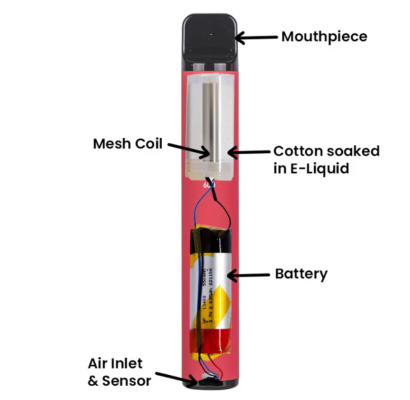
Disposable vapes contain several components that work together to power the device, manage airflow, and generate an aerosol. Although the external design can vary, most devices use some combination of a battery, heating element, internal reservoir, airflow channel, and outer casing.
Understanding disposable vape components makes product specifications easier to interpret. It also helps distinguish between the parts responsible for electrical power, material storage, and aerosol production.
This guide explains the main components of a disposable vape, what each part does, and how differences in hardware affect the overall device design.
What Are the Main Components of a Disposable Vape?
The internal structure of a disposable vape depends on its design and intended contents. However, several components are common across many electronic vaping devices.
The main disposable vape parts include:
- Battery: Supplies electrical power.
- Heating element: Generates heat to produce an aerosol from the device’s contents.
- Reservoir or internal chamber: Holds the material the device is designed to contain.
- Airflow channel: Directs air through the device.
- Mouthpiece: Provides the opening through which the aerosol is inhaled.
- Outer casing: Houses and protects the internal components.
- Electronic controls or sensors: Present in some devices to manage activation or indicate operating status.
Not every disposable vape contains the same components in the same arrangement. Some designs include additional electronics or indicators, while others use simpler configurations.
The term disposable describes the device’s intended use and disposal model. It does not identify one universal hardware design.
How Does a Disposable Vape Battery Work?
The battery supplies the electrical energy required to operate the device. When the device activates, electrical current powers the heating system.
Many disposable vapes use rechargeable or non-rechargeable lithium-based batteries, depending on the model. Some devices activate when the user draws air through the mouthpiece, while others may use a button or another activation mechanism.
Battery specifications are separate from material capacity. For example, a product labeled 1g describes a stated material quantity; it does not reveal the battery’s electrical capacity.
Battery performance can depend on several factors, including battery characteristics, power consumption, heating-system requirements, and the device’s electronic design.
The presence of a rechargeable battery also does not mean the device is designed to be refilled or serviced. Those features depend on the manufacturer’s intended design.
What Does the Heating Element Do in a Disposable Vape?
The heating element is responsible for generating the heat needed to produce an aerosol from the material inside the device.
Depending on the device, the heating system may use a resistive coil or another heating structure. Electrical energy from the battery passes through the system, generating heat when the device is activated.
Heating-system designs differ in their construction, materials, and operating characteristics. The exact configuration cannot be determined from the product’s external appearance alone.
It is also important to distinguish aerosol production from combustion. Electronic vaping devices are designed to generate an aerosol through heating, but that does not mean the resulting aerosol is harmless or free of potentially harmful substances.
The U.S. Food and Drug Administration’s overview of e-cigarettes and vapes provides additional information about these products and their components.
How Does a Disposable Vape Reservoir Work?
The reservoir or internal chamber holds the material the device is designed to contain. Its construction varies according to the product type and the material involved.
In many e-liquid devices, the internal system delivers liquid to a heating element. Other devices may use different containment and delivery arrangements depending on their intended contents.
The reservoir’s capacity is not the same as the total weight of the device. A capacity label describes a stated quantity of material, while the assembled device also includes its battery, casing, and other hardware.
Reservoir design can also differ between products carrying similar capacity labels. The label alone does not establish the exact internal structure, the material’s composition, or the accuracy of the stated quantity.
For this reason, product descriptions should be read alongside the manufacturer’s available specifications rather than treated as complete technical documentation.
What Is the Airflow System in a Disposable Vape?
The airflow system directs air through the device during operation. In many designs, air enters through an inlet, passes through an internal channel, and carries the generated aerosol toward the mouthpiece.
Some devices use a draw-activated sensor that detects changes in airflow pressure and triggers the heating system. Other designs use a button or a different control mechanism.
Airflow arrangements vary by model. Differences in inlet placement, internal channels, and mouthpiece construction affect how air moves through the device.
Airflow should not be confused with the heating system itself. The heating element generates heat, while the airflow pathway directs air and carries aerosol through the device.
What Is the Role of the Mouthpiece and Outer Casing?
The mouthpiece and outer casing are visible parts of the device, but they serve different purposes.
The mouthpiece provides the opening through which the user draws air and aerosol. Its shape and placement depend on the device’s design.
The outer casing encloses the battery, reservoir, heating system, and other internal components. It may also incorporate the device’s external controls or indicator lights.
Some devices have compact, streamlined casings, while others use larger housings to accommodate different internal arrangements. External appearance alone does not reliably establish the device’s material capacity, battery specifications, or internal construction.
A polished exterior is also not evidence of product authenticity or manufacturing quality. Those claims require separate, verifiable information.
How Do Disposable Vape Components Work Together?
The main components operate as a connected system rather than as independent parts.
In a typical draw-activated electronic vaping device, the process generally follows this sequence:
- Activation: A draw sensor or another activation mechanism signals that the device is being used.
- Power delivery: The battery supplies electrical energy to the heating system.
- Heating: The heating element generates heat.
- Aerosol production: The heated material produces an aerosol.
- Airflow: Air carries the aerosol through the internal pathway toward the mouthpiece.
The exact sequence and component arrangement vary by device. Some models use different activation systems or internal delivery designs.
This interaction explains why one specification cannot describe the entire device. Battery capacity, reservoir size, heating-system design, and airflow are separate elements that contribute to the device’s overall operation.
Do All Disposable Vapes Use the Same Components?
No. Disposable vape hardware varies across manufacturers, product categories, and individual models.
Differences may include:
- Battery type and electrical specifications.
- Heating-element construction.
- Reservoir design and stated capacity.
- Draw-activated sensors or manual controls.
- Airflow pathways.
- Indicator lights and other electronic features.
- Casing materials and overall dimensions.
A device designed for one type of material may use a different internal arrangement from a device intended for another. It is therefore inaccurate to assume that every disposable vape has identical components simply because the products share the same general category.
Technical details should be confirmed through product documentation wherever possible.

What Do Disposable Vape Components Tell You About Product Specifications?
Understanding the internal parts helps clarify what a product description can and cannot establish.
Battery specifications describe the power source, not the quantity of material inside the device.
Material capacity describes the stated quantity of contents, not the battery’s electrical capacity.
Heating-system design describes part of the mechanism used to generate an aerosol, but does not independently establish the aerosol’s composition or safety.
Airflow design describes how air moves through the device, but does not prove product quality or authenticity.
External design describes the casing and visible features, but does not confirm the internal hardware or stated contents.
These distinctions matter when interpreting technical claims. A product’s name, packaging, or appearance should not be treated as a substitute for verifiable specifications.
Frequently Asked Questions About Disposable Vape Components
What are the main parts of a disposable vape?
Common components include a battery, heating element, reservoir or internal chamber, airflow pathway, mouthpiece, and outer casing. Some devices also contain electronic sensors, controls, or indicator lights.
What does the battery do in a disposable vape?
The battery supplies the electrical energy needed to operate the heating system and any associated electronics.
What is the heating element in a vape?
The heating element generates heat that allows the device to produce an aerosol from its contents. Its design varies between products.
What does the reservoir do?
The reservoir or internal chamber holds the material the device is designed to contain. Its capacity and construction depend on the product.
How does airflow work in a disposable vape?
Air moves through designated internal channels and carries aerosol toward the mouthpiece. Some devices use airflow sensors to activate the heating system.
Do all disposable vapes have rechargeable batteries?
No. Battery design varies by model. Some disposable devices have rechargeable batteries, while others are designed with non-rechargeable batteries.
Can you determine a vape’s internal components from its appearance?
Not reliably. External design may reveal some features, but detailed internal construction should be confirmed through manufacturer documentation or other verifiable technical information.
Do disposable vape components determine product safety?
Component design can influence how a device operates, but the presence of particular components does not independently establish that a product is safe. Device construction, contents, aerosol composition, and applicable regulatory requirements are separate considerations.

Final Thoughts on Disposable Vape Components
Disposable vape components perform distinct but interconnected functions. The battery supplies power, the heating element generates heat, the internal chamber contains the material, and the airflow system directs the resulting aerosol toward the mouthpiece.
Although these functions are common across many electronic vaping devices, the actual hardware arrangement varies by product.
Understanding the components makes it easier to interpret product specifications without confusing material capacity, battery performance, or external design. For accurate comparisons, rely on clear technical documentation and treat unsupported product claims with caution.
